

India’s Met Gala journey has changed dramatically over the last decade. There was a time when the conversation was simple. Which Indian celebrity attended? Today, the question is far more interesting. What did their look say about India?
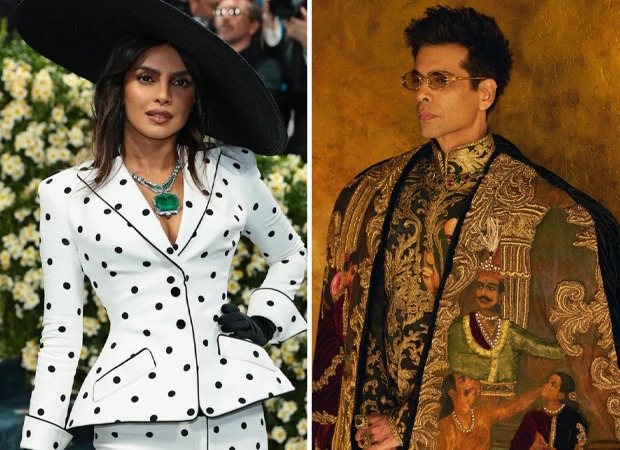
That shift, from visibility to meaning, is the real story of Indian representation at the Met Gala. And Met Gala 2026 may be remembered as the year that shift became impossible to ignore.
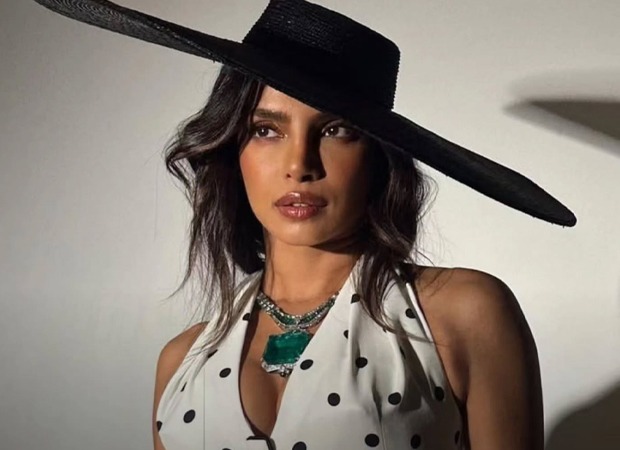
In 2017, Priyanka Chopra made one of the earliest major Indian pop culture breakthroughs at the Met Gala in a dramatic Ralph Lauren trench coat dress with a sweeping train. It was an avant-garde twist on the trench, one that required assistance to handle and later converted into a minidress for after-parties. It became instantly viral. The memes came first, but so did the attention.
That was important. Priyanka did what few Indian actors had done at the time. She dominated a global fashion conversation. She was not a side note. She was part of the main event.
But that era of Indian Met Gala representation was still largely about being seen. The conversation revolved around star power, surprise, glamour and global arrival. It was visibility politics, and visibility mattered.
Over the next few years, Indian and Indian-origin appearances began to grow in number and confidence. The carpet slowly became less about one Indian name carrying the entire conversation and more about a broader presence. Alia Bhatt, Isha Ambani, Natasha Poonawalla and others helped expand the idea of what Indian representation could look like.
Then came 2025, which felt like a turning point. The list of Indian origin stars at the 2025 Met Gala included Shah Rukh Khan in Sabyasachi, Priyanka Chopra in Balmain, Diljit Dosanjh in Prabal Gurung, Natasha Poonawalla in Manish Malhotra, Mona Patel in Thom Browne and Kiara Advani in Gaurav Gupta. Suddenly, India was not represented by one or two familiar faces. It had range.
Shah Rukh Khan brought Bollywood royalty. Diljit Dosanjh brought Punjabi identity. Natasha Poonawalla brought Parsi heritage. Kiara Advani brought motherhood symbolism. Mona Patel brought tech-theatre with a robotic dog. The Indian presence was no longer one-dimensional.
But 2026 pushed the journey further.
Karan Johar’s Met Gala debut in a Manish Malhotra outfit inspired by Raja Ravi Varma felt like a new phase. This was not merely an Indian celebrity attending a Western event. This was Bollywood arriving with its own art reference, its own emotional grammar and its own visual history. That is a huge difference.
Priyanka Chopra’s trench coat made India visible. Karan Johar’s Raja Ravi Varma inspired look made India readable. It gave the global audience something to decode. It said that Indian fashion at the Met Gala need not simply be about looking glamorous in an international setting. It can carry paintings, memory, cinema and cultural authorship.
Isha Ambani’s Gaurav Gupta saree added another dimension. Her look combined Indian craft, family jewellery, a sculptural cape and even a Subodh Gupta mango sculpture as a handbag. That is not just fashion. That is India’s luxury ecosystem speaking in a global language.
Princess Gauravi Kumari’s use of Maharani Gayatri Devi’s chiffon sari, reworked by Prabal Gurung into a gown, brought royal archive into the conversation. Ananya Birla’s Subodh Gupta facepiece turned fashion into sculpture. Manish Malhotra’s artisan-focused cape brought the karigar closer to the spotlight.
Together, these looks showed that Indian Met Gala representation has matured. The first phase was attendance. The second phase was virality.
The third phase was star power. The current phase is storytelling.
This is the most exciting phase because India is no longer waiting to be interpreted by others. It is beginning to curate its own global image. And that matters for Bollywood too.
Bollywood has always been a soft power machine, even when it did not use that vocabulary. Its songs travel. Its stars travel. Its costumes travel. Its family dramas, romances and dances have shaped how millions outside India imagine Indian emotion and beauty. The Met Gala gives Bollywood and Indian fashion a place to convert that emotional memory into high culture.
That is why the journey from Priyanka Chopra’s trench coat to Karan Johar’s Raja Ravi Varma cape is not just a fashion timeline. It is a cultural timeline.
India first entered the room. Then it got photographed. Then it went viral.
Now, it is telling the room what to look at.
The post From Priyanka Chopra’s viral trench coat to Karan Johar’s Raja Ravi Varma cape: How India’s Met Gala story changed forever appeared first on Bollywood Hungama.
from Bollywood Hungama https://ift.tt/Hvyf6g7



0 Comments